Considering Neurofeedback for Your Child with Autism? 6 Questions Worth Asking
When you’re exploring ways to support your child, it’s natural to have questions. You want to know how a service works, whether your child will feel comfortable, and what you can realistically expect.
For parents of children with autism, those questions can be especially important. Every child has different strengths, communication styles, sensory preferences, and support needs. What works for one child may not be the right fit for another. At Arizona Center for Neurofeedback (ACFN) in Scottsdale, Arizona, we believe that exploring a new service should begin with understanding the individual, not simply their diagnosis.
If you’re considering Neurofeedback for your child, here are six questions worth asking before getting started.
1. What Are We Hoping to Support?
Before exploring Neurofeedback, consider what you’d most like to understand or support in your child’s everyday life.
Maybe your child has difficulty navigating transitions, maintaining attention during certain activities, or managing overwhelming situations. Rather than focusing solely on an autism diagnosis, it can be helpful to identify the specific experiences affecting your child’s daily routine. At ACFN, understanding individual needs and goals is an important part of exploring whether Neurofeedback training may be appropriate.
A question worth asking: What specific goals would we be working toward, and how would we recognize meaningful progress?
Establishing clear goals can help families approach the process with realistic expectations.
2. Will My Child Be Comfortable During Sessions?
For some children with autism, unfamiliar environments, sounds, visual stimulation, or physical sensations can make new experiences challenging.
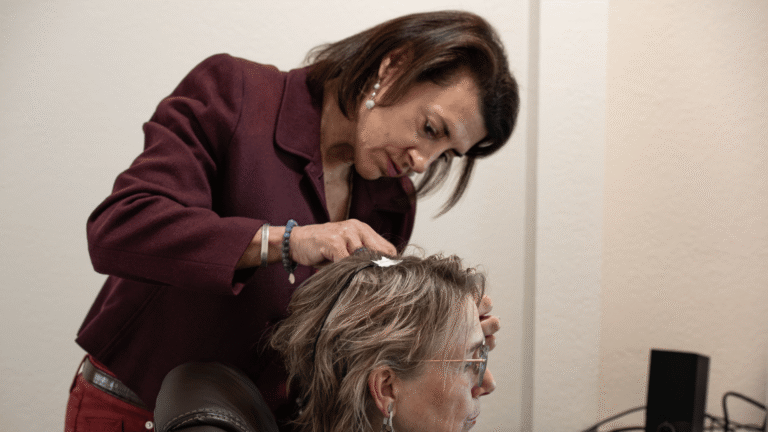
During EEG Neurofeedback, sensors are placed on the scalp to measure electrical brain activity. A computer then uses that information to provide feedback, often through video or sound. These sensors record activity rather than sending electrical stimulation into the brain.
However, understanding the technology is only part of deciding whether the experience is appropriate for a child. Parents may also want to know how their child will respond to the environment, whether they can tolerate the sensors, and what adjustments may be possible.
A question worth asking: How can the experience be adapted to accommodate my child’s sensory preferences and comfort level?
Discussing potential challenges before scheduling can help parents and providers determine whether sessions may be a good fit.
3. Does My Child Need to Communicate a Certain Way?
Children with autism communicate in many different ways. Some communicate verbally, while others use gestures, visual supports, communication devices, or other methods.
Parents may wonder whether their child needs to explain their emotions or describe their experiences to participate in Neurofeedback. Because Neurofeedback uses measured brain activity to provide feedback, participation doesn’t necessarily depend on a child’s ability to verbally describe their internal experiences. However, the child still needs to be comfortable with the equipment and able to participate in the training experience in a way that meets their individual needs.
A question worth asking: What would participation look like for my child, given their communication style and abilities?
The answer should reflect the individual child rather than a standardized expectation.
4. How Does Neurofeedback Fit Into My Child’s Existing Support Plan?
Many families exploring Neurofeedback already have established support systems.
These may include speech-language services, occupational therapy, school accommodations, counseling, or other developmental and behavioral supports. Exploring Neurofeedback doesn’t mean those existing services need to change. Instead, parents can consider whether Neurofeedback might serve as a complementary option for a particular goal and how it would fit into their child’s broader care plan.
At ACFN, our approach to Clinical Psychology emphasizes individualized assessment and understanding the broader factors affecting a person’s well-being.
A question worth asking: How would Neurofeedback fit alongside the services my child already receives?
Families should discuss any proposed changes to established services with the professionals involved in their child’s care.
5. What Does the Research Actually Tell Us?
When exploring any new approach, it’s important to understand both its potential applications and the limitations of current research.
Researchers have investigated Neurofeedback in individuals with autism, including its possible relationship to attention, executive functioning, and self-regulation. Some studies have reported encouraging findings, but results have been mixed, and research remains limited by differences in study methods, training protocols, and participant characteristics.
Neurofeedback is not a cure for autism or an established treatment for autism itself. More high-quality research is needed to determine whether particular approaches may be beneficial for specific goals.
For families interested in learning more about the science and how the approach works, our previous article, Exploring Neurofeedback for Children with Autism: What Families Should Know, provides additional background.
A question worth asking: What evidence supports Neurofeedback for my child’s specific goals, and what uncertainties should we consider?
An informed decision should account for both the possibilities and what has not yet been established.
6. What Should We Expect From the Process?
Even when a service sounds promising, parents deserve to understand what participation would involve before making a commitment.
Consider asking about the initial consultation, the assessment process, the typical training schedule, financial considerations, and how progress would be evaluated. It’s equally important to understand what happens if a child becomes uncomfortable, has difficulty participating, or doesn’t appear to be progressing toward the agreed-upon goals.
For a broader overview of the experience, families can explore our guide to what to expect at your first appointment.
A question worth asking: How will we evaluate whether continuing Neurofeedback makes sense for my child?
A thoughtful approach should allow room for ongoing conversations, adjustments, and individualized decisions.
Helping Families Make Informed Decisions
There isn’t one approach that meets the needs of every child with autism.
For some families, exploring Neurofeedback may be part of a broader conversation about attention, self-regulation, or other individualized goals. For others, different services may be more appropriate. At Arizona Center for Neurofeedback, we believe the most important first step is understanding your child’s experiences, asking questions, and considering the available information with realistic expectations.
If you’re exploring Neurofeedback for your child in Scottsdale, Arizona, our team is available to explain the process and discuss whether a consultation may be appropriate.
Contact Arizona Center for Neurofeedback to ask questions or learn more about our services.