
Exploring Neurofeedback for Children with Autism: What Families Should Know
Every child experiences the world differently. For children with autism, these differences may affect how they communicate, process information, manage emotions, and handle everyday situations. As a parent, finding the right support often means exploring different options to understand what works best for your child.
One option you may come across is Neurofeedback for children with autism. This noninvasive approach uses real-time feedback to help individuals practice regulating their brain activity. But how does it work, and what should families know before considering it?
Understanding Autism and Your Child’s Needs
Autism Spectrum Disorder (ASD) is a neurodevelopmental condition that affects how individuals communicate, interact, and experience the world. Because autism is a spectrum, every child has unique strengths, preferences, and support needs.
Some children may experience challenges with attention, emotional regulation, sensory sensitivities, or changes in their routines. Others may benefit from additional support with communication or everyday activities. When exploring care options, the goal isn’t to change who your child is. It’s to understand their needs and help them build skills that support their comfort, independence, and well-being.
What Is Neurofeedback and How Does It Work?
Neurofeedback is a type of brain training that uses sensors to monitor electrical activity in the brain. This activity is then displayed through a computer-based program, often in the form of a game or video.
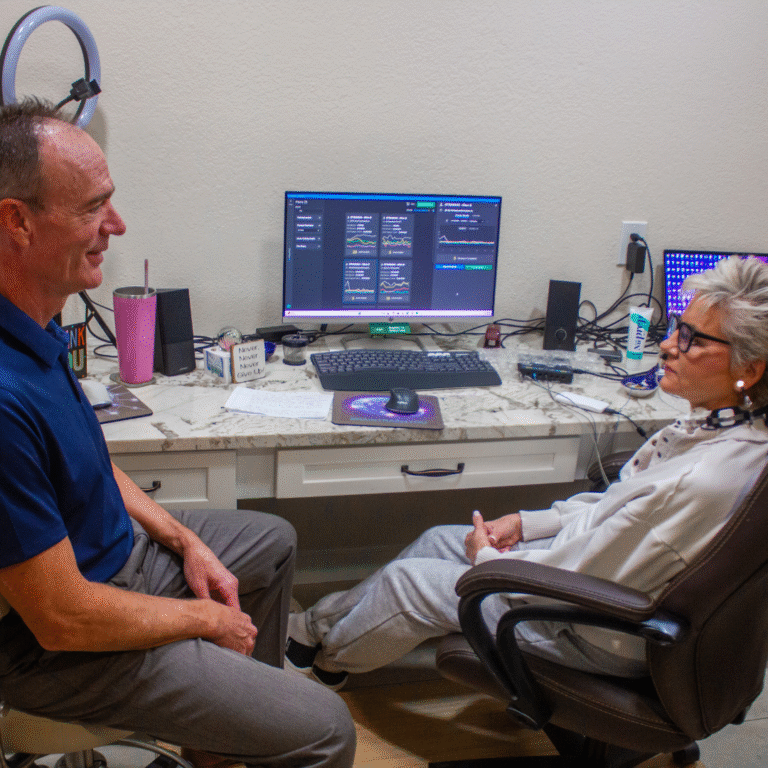
During a session, small sensors are placed on the scalp to measure brain activity. As that activity changes, the program responds with visual or auditory feedback. Over time, this process gives individuals opportunities to practice self-regulation. The sensors only record brain activity. They do not send electrical stimulation into the brain.
At Arizona Center for Neurofeedback, we emphasize understanding each client’s individual needs and goals when exploring Neurofeedback.
What Does Research Say About Neurofeedback for Autism?
Researchers have studied whether Neurofeedback may help with challenges some autistic children experience, such as attention, flexibility in thinking, and emotional regulation. Some studies have reported promising results. However, research is still limited, and findings have been mixed. More high-quality studies are needed to understand whether Neurofeedback offers lasting benefits and which children, if any, may benefit most.
It’s important to understand that Neurofeedback is not a cure for autism or an established treatment for autism itself. It should not replace established developmental, educational, communication, or mental health services.
Instead of expecting Neurofeedback to change autism, families should focus on understanding what the training involves and whether it may be appropriate for a specific concern. Learning more about how Neurofeedback works can help parents make informed decisions about their child’s options.
Why Individualized Assessment Matters
Every child has different needs, which makes a thoughtful assessment an important part of considering Neurofeedback. One tool used in Neurofeedback planning is quantitative electroencephalography (QEEG), often called brain mapping. This assessment records and analyzes patterns of electrical brain activity. Providers may use this information to help guide Neurofeedback training.
However, QEEG cannot diagnose autism, and it cannot predict whether Neurofeedback will work for a particular child.
What Should Parents Consider Before Starting?
Before trying Neurofeedback for a child with autism, it’s important to speak with a qualified healthcare professional and consider how it fits into your child’s existing support plan.
Here are a few helpful questions to ask:
- What specific goals would we focus on?
- How would we measure progress?
- What happens during a typical session?
- How would Neurofeedback fit alongside other therapies or school-based supports?
- What are the costs, possible downsides, and limits of the current research?
It’s also important to consider your child’s comfort. Their sensory preferences, communication needs, and response to unfamiliar equipment can all affect whether sessions are a good fit. Families interested in exploring ACFN’s approach can learn more about our available services.
Helping Families Make Informed Decisions
Exploring Neurofeedback for children with autism starts with understanding both what the approach involves and what research has yet to establish. Having clear information can help families make confident, informed decisions.
At Arizona Center for Neurofeedback, we believe care should begin with understanding the individual. Our team is available to explain the Neurofeedback process, answer questions, and discuss whether further evaluation may be appropriate for your child.
Interested in learning more? Contact Arizona Center for Neurofeedback to explore your options and connect with our team.